Dubrovnik
2024

Approaching the walled city from the Adriatic
Dubrovnik is a city in southern Croatia fronting the Adriatic Sea. It's known for its distinctive Old Town, encircled with massive stone walls completed in the 16th century. Its well-preserved buildings range from baroque St. Blaise Church to Renaissance Sponza Palace and Gothic Rector’s Palace, now a history museum. Paved with limestone, the pedestrianized Stradun (or Placa) is lined with shops and restaurants.

Approaching the walled city from the Adriatic

Old Port

Old Port

Fortifications above the Old Port - this is the Ploče Gate
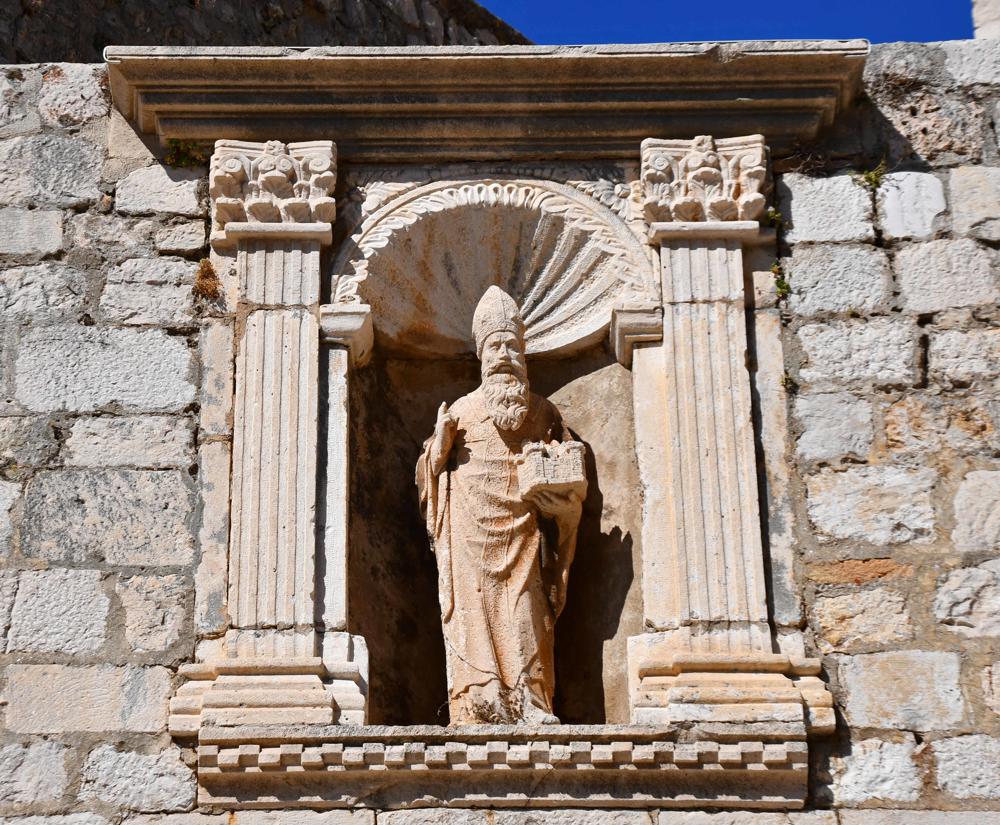
Ploče Gate - statue of St. Vlaho (St. Blaise), patron saint of the city

Ploče Gate drawbridge
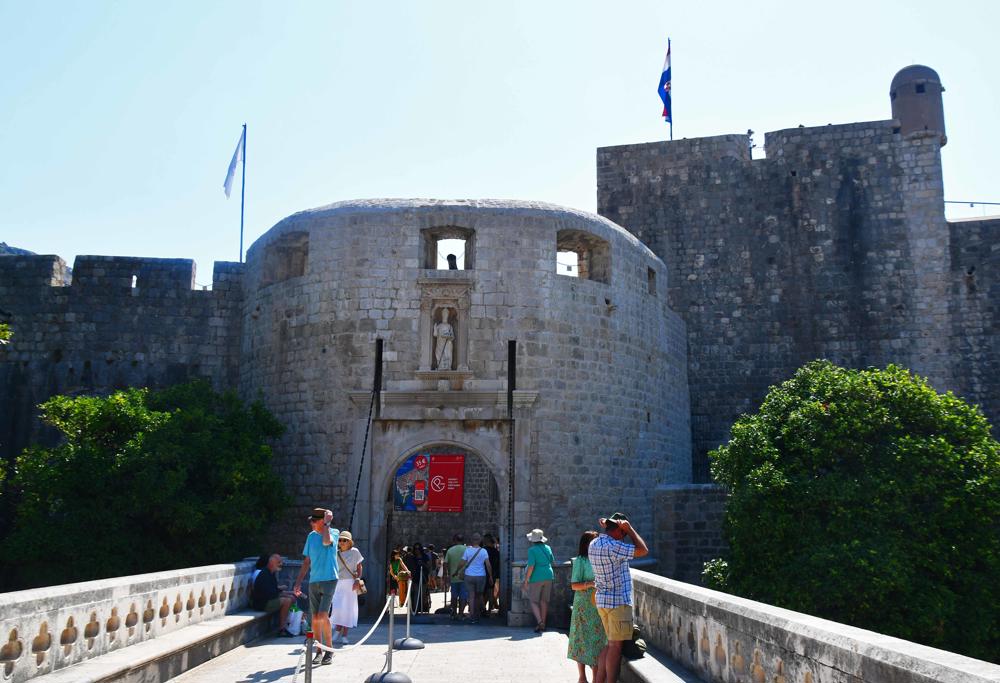
Pile Gate and drawbridge

Fortifications at Pile Gate

Ponta Gate at Old Port

Ponta Gate at Old Port - IHS medallion

Rector's Palace

Sponza Palace and Rector's Palace
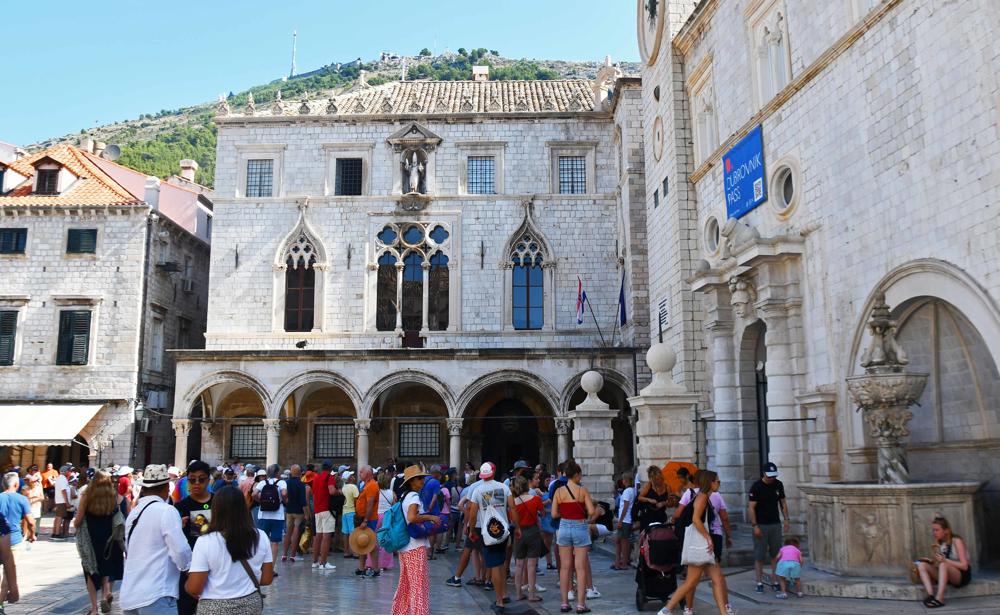
Sponza Palace

Sponza Palace

Sponza Palace - another statue of St. Vlaho (St. Blaise), patron saint of the city

City Hall

The Stradun (main street) - and belltower of the Franciscan Church and Monastery

Franciscan Church and Monastery

Franciscan Church and Monastery

Onofrio's Large Fountain at one end of the Stradun

Onofrio's Large Fountain at one end of the Stradun

Onofrio's Small Fountain at the other end of the Stradun

Clocktower near Onofrio's Small Fountain

Dominican Monastery

Dominican Monastery

Monument of Ivan Gundulić (1589-1638), regarded as the Croatian national poet.
Born and died in Dubrovnik and buried in the Franciscan Church and Monastery

The "Jesuit staircase" that leads to the former Jesuit college and the Church of St. Ignatius

The "Jesuit staircase" that leads to the former Jesuit college and the Church of St. Ignatius

Local crafter

Yes, there is a mosque. The Arabic reads: Islamic Mosque in the Croatian Republic
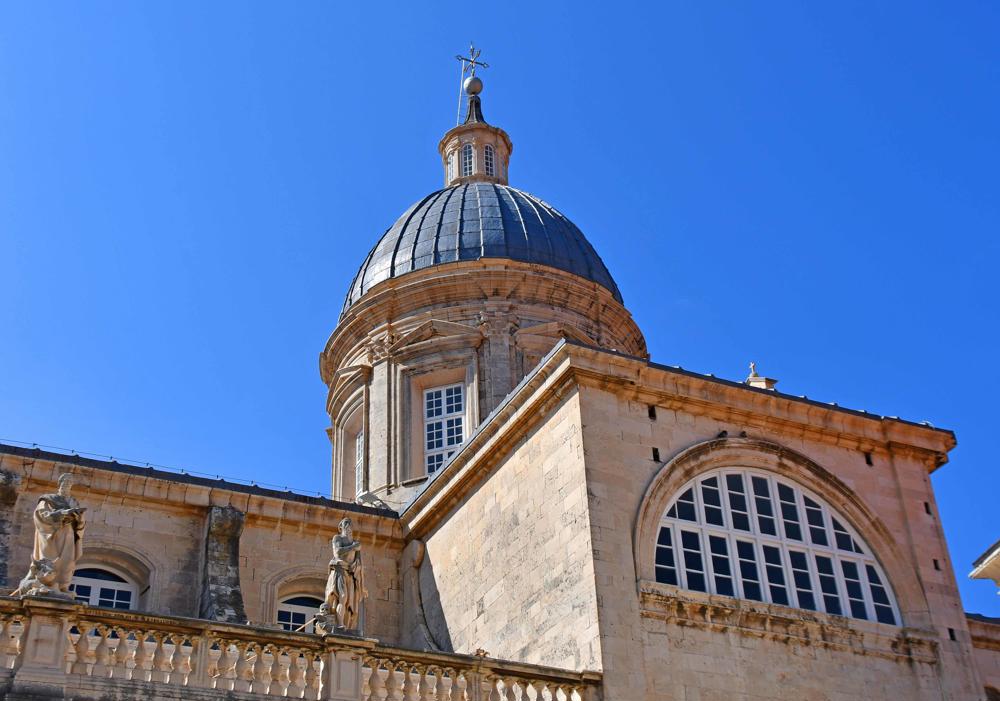
Cathedral of the Assumption of the Virgin Mary

The Cathedral of the Assumption of the Virgin Mary is a Roman Catholic cathedral in Dubrovnik. The cathedral was built on the site of several former cathedrals, including 7th, 10th and 11th century buildings, and their 12th century successor in the Romanesque style. The money to build the basilica was partially contributed by the English king Richard the Lion Heart, as a votive for having survived a shipwreck near the island of Lokrum in 1192 on his return from the Third Crusade. The building was damaged by the 1979 Montenegro earthquake, and by at least one shell during the Siege of Dubrovnik in 1991.


Statue of Saint Joseph with child in hand

Statue of patron saint Saint Blaise (St Vlaho) on a niche


Main altar - a polyptych by Titian, portraying a version of the Assumption of the Virgin, dating from around 1552.

Statue of Jesus Christ

Altar of Saint John of Nepomuk


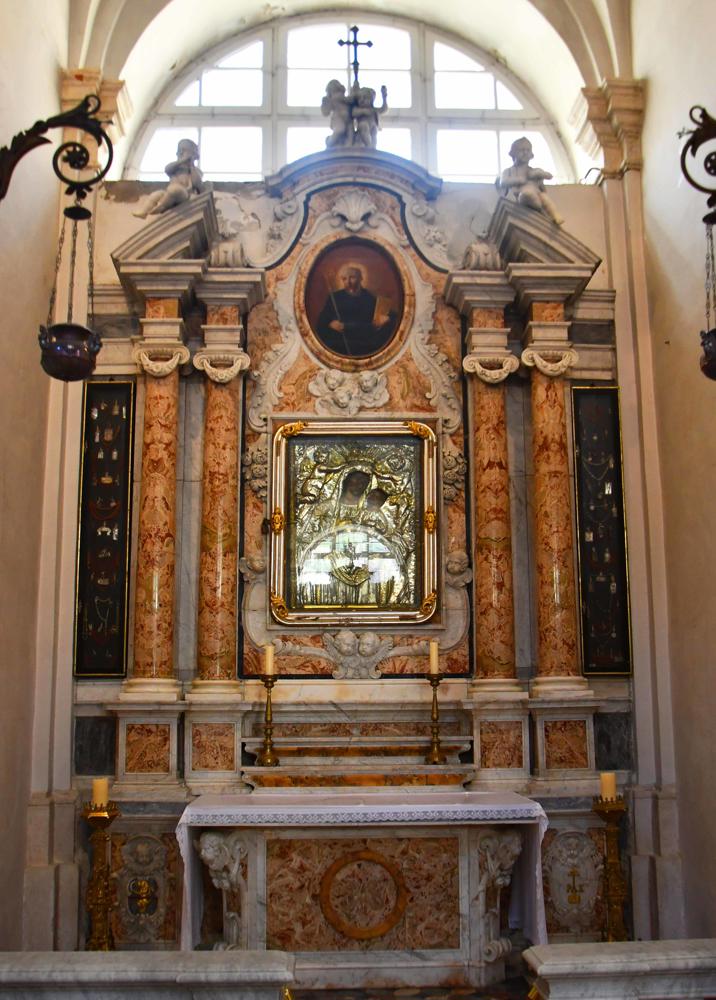
Votive altar of Our Lady of the Port

Painting of the Miracle of St. Dominic

Statue of St. Therese of Lisieux
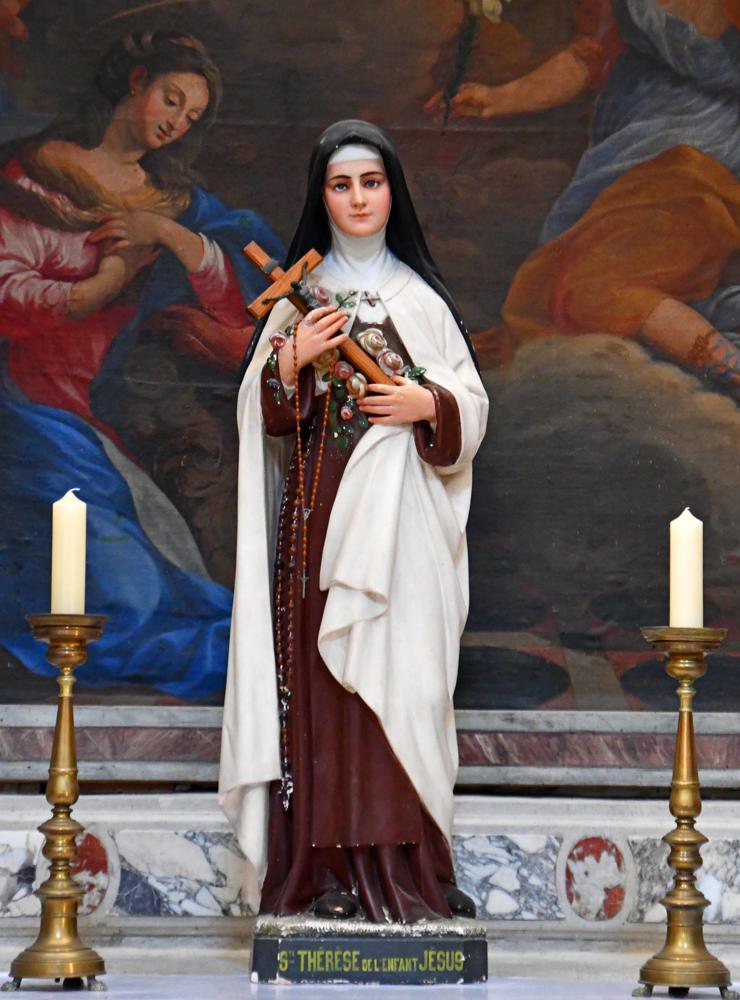
Statue of St. Therese of Lisieux

Painting of The Last Supper by the Czech artist Vlaho Bukovac, circa 1911.
Jesuit Church of St. Ignatius

Formerly the Jesuit College, now the Church of St. Ignatius
Located in the square at the top of a large Baroque staircase leading off from the main thoroughfare of Dubrovnik is the Dubrovnik University Collegium Ragusnium building and the Church of St. Ignatius. The church dates from the beginning of the 18th century and formed part of the project for the construction of a Jesuit college. This was originally planned in 1653, the Great Earthquake of 1667 halted the work until 1702; the building was completed in 1725. Baroque in design the church consists of a single nave with a number of side chapels. It contains a semi-circular apse containing frescoes depicting the life of St. Ignatius de Loyola (1491-1556), the founder of the Jesuit order. These were painted by Gaetano Garcia, an Italian Baroque painter of Spanish origin. Also, at the rear is a set of man-made caves that were made in 1885. These contains a statue of Our Lady of Lourdes to whom the caves were dedicated. The church belfry contains the oldest bell in Dubrovnik which was cast in 1355.

Apse with Gaetano Garcia's frescoes
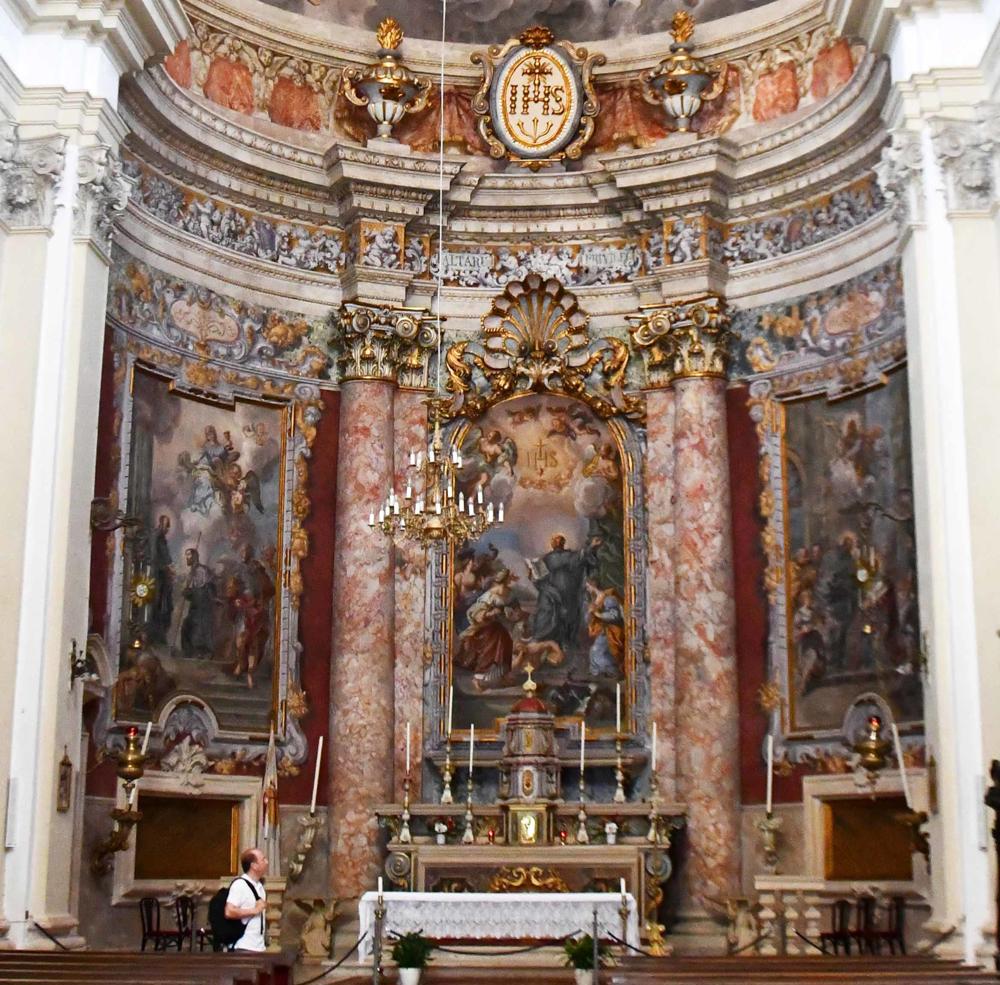
Apse with Gaetano Garcia's frescoes

Apse with Gaetano Garcia's frescoes - ceiling panel

Apse with Gaetano Garcia's frescoes

Apse with Gaetano Garcia's frescoes - left panel
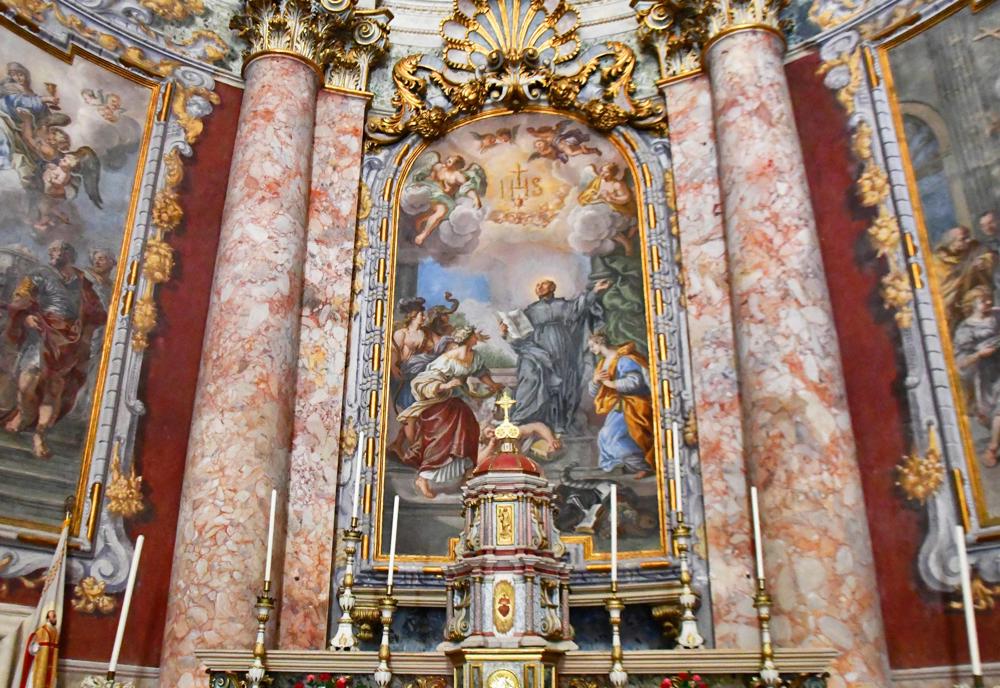
Apse with Gaetano Garcia's frescoes - center panel

Apse with Gaetano Garcia's frescoes - right panel


Painting of St Aloysius Gonzaga before the Virgin and Child - I could not find the name of the artist


Our Lady of Lourdes grotto
Church of the Holy Annunciation Serbian Orthodox Church

The Church of the Holy Annunciation is a Serbian Orthodox church in Dubrovnik, built in 1877. In 1775, the Russian Empire sent its consul to Dubrovnik – he built an Orthodox chapel in the garden of the Russian consulate. The church has a valuable collection of icons, some of them dating from the 15th and 16th centuries. The church sustained damage from bombing during the Siege of Dubrovnik but was restored in 2009.

Gold iconostasis

Gold iconostasis

Gold iconostasis

Mural of the Last Supper
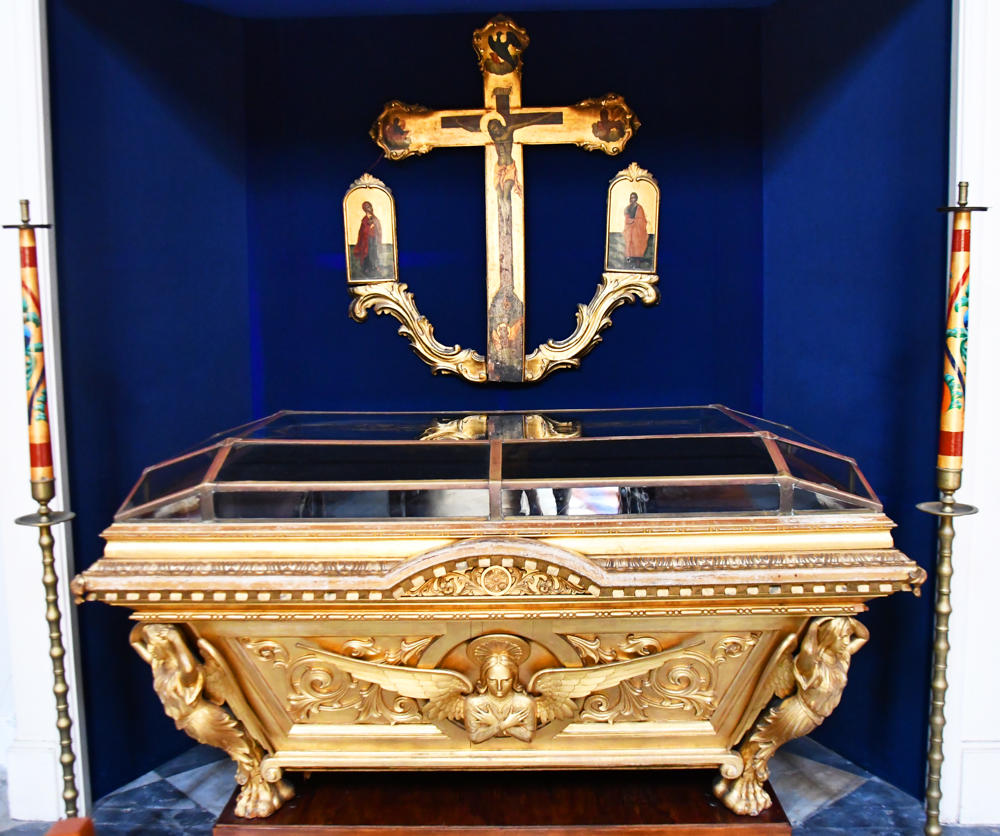
Reliquary of St Classia (?) (I cannot find any information on him)
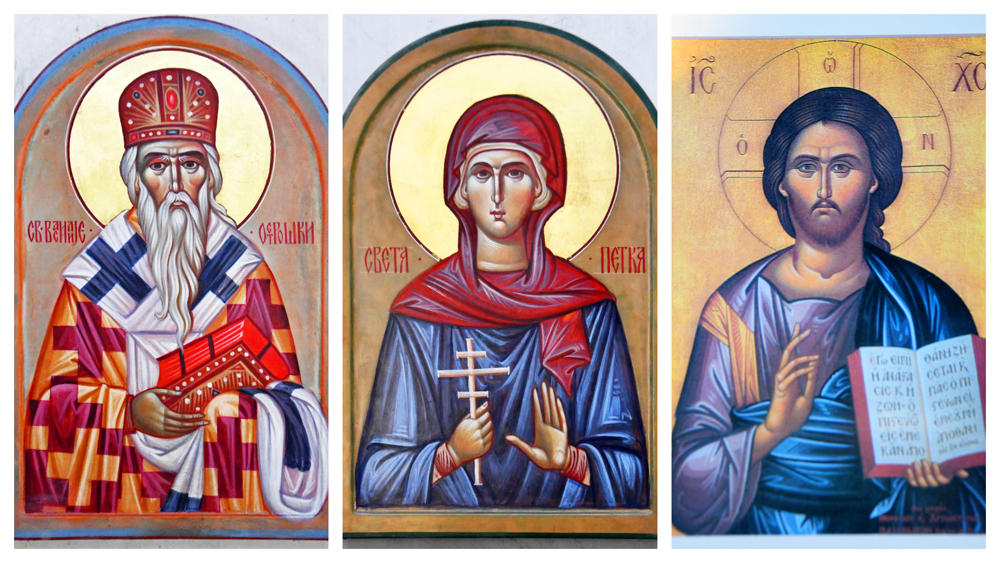
St Basil (Vasili) of Ostrog - St Petka - Jesus Christ

The Annunciation - Archangel Gabriel to Mary (left) - Virgin Mary and Child (right)

Announcement of the Serbian archbishop

Transfer of relics of St Classia from Constantinople to Dubrovnik
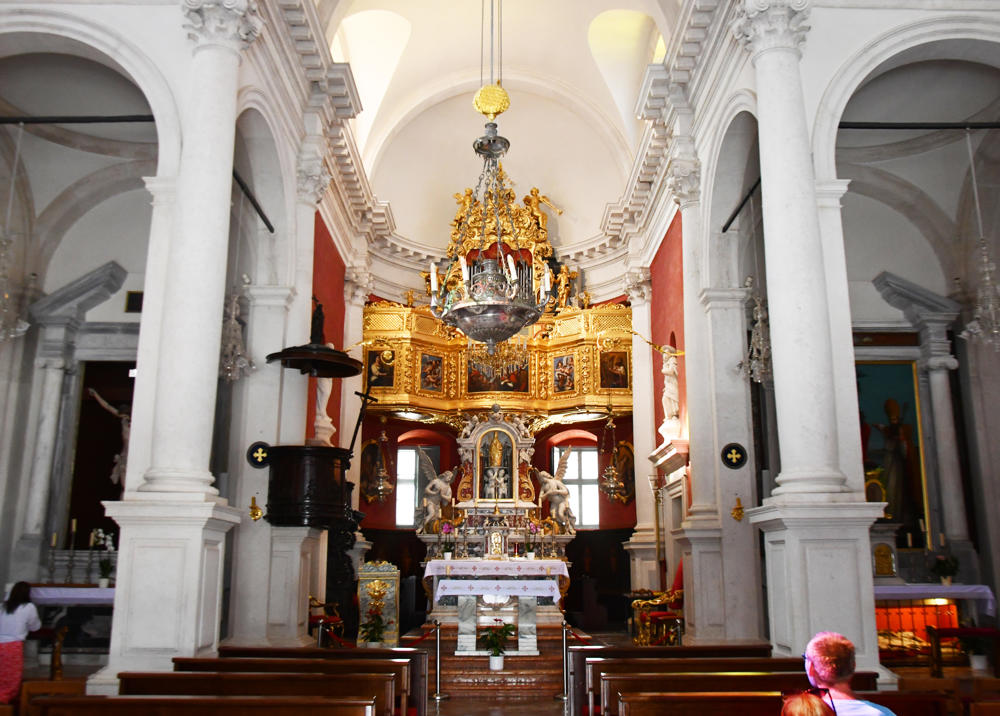
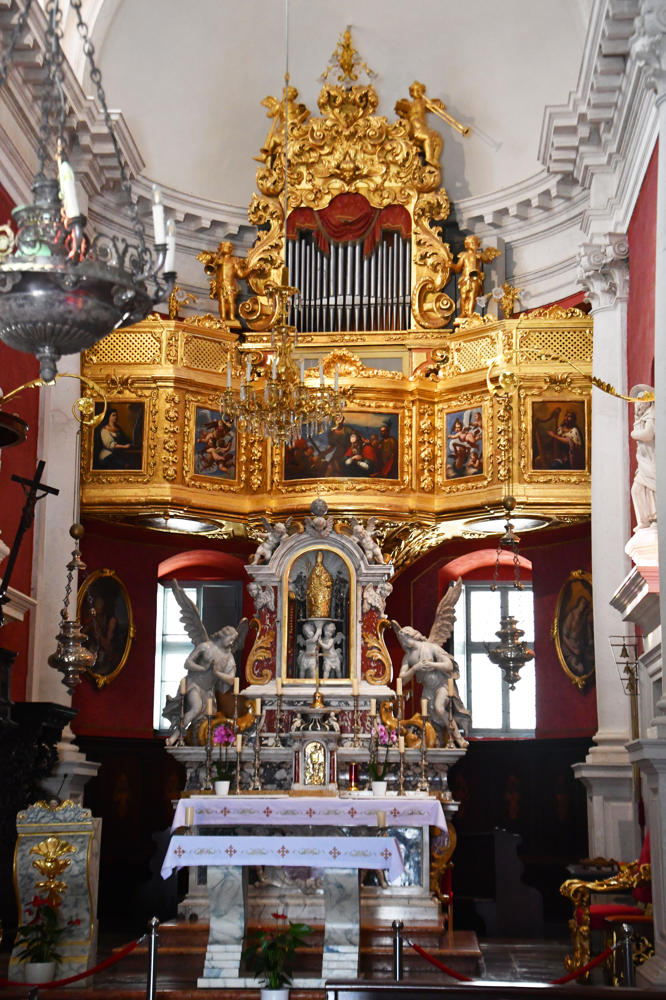
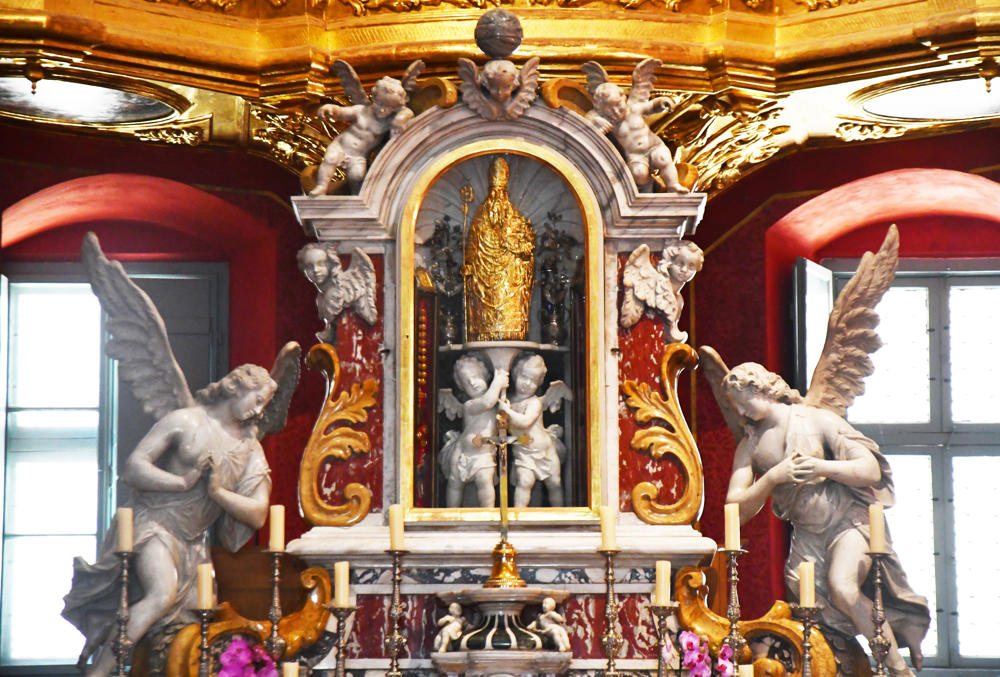
Church of Saint Blaise
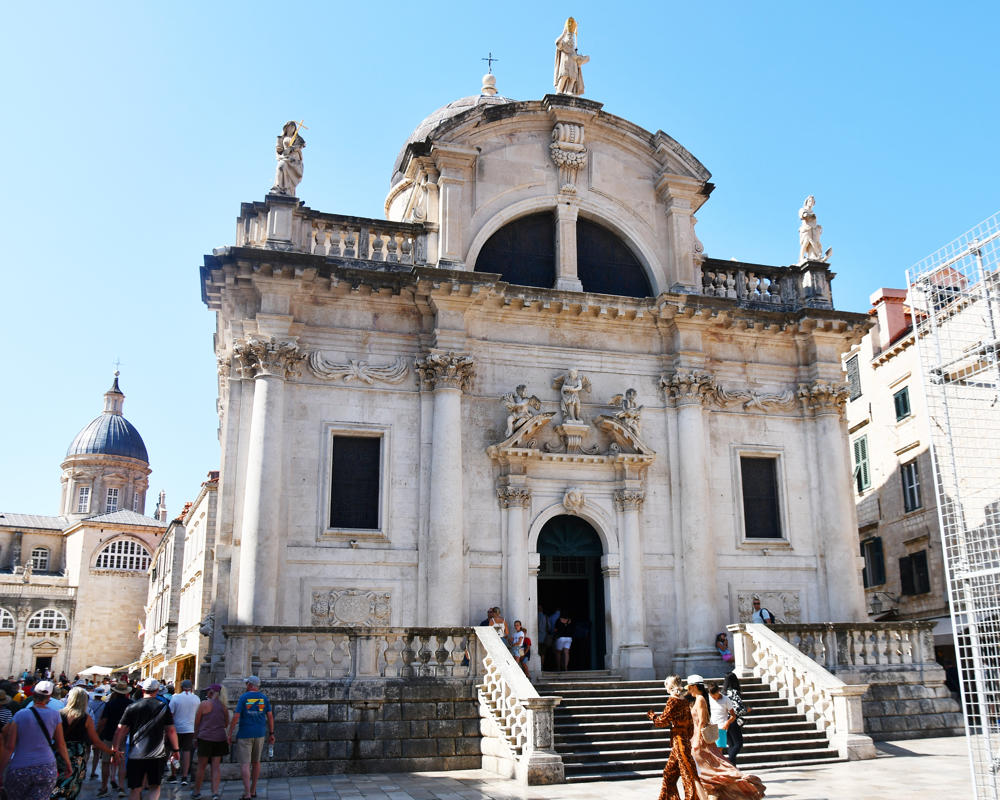
The Church of St. Blaise (St Vlaho) was built between 1706 and 1715 by the Venetian architect and sculptor Marino Gropelli (1662-1728) on the foundations of the badly damaged 14th century Romanesque church. The vaulted interior is richly decorated in the Baroque style. The building was damaged in the 1979 earthquake and during the Croatian war of independence (1991-1992). St. Blaise is the patron saint of the city of Dubrovnik and once the protector of the independent Republic of Ragusa.